

What Is a Work Platform and How Is It Used?
Work platforms are designed to provide a stable and secure surface for working at height. They are widely used across industries such as manufacturing, maintenance, cleaning, and repair, where safe access to elevated areas is required.
Their versatility and ability to support safe and efficient working at height make them an essential part of many industrial environments.
In the UK, work platforms must be used in accordance with relevant safety legislation, including the Work at Height Regulations 2005, which sets out requirements for safe access and working at height.
There are various types of work platforms available, differing in size, load capacity, and working height. Selecting the correct platform depends on the specific application and working environment. Choosing the right solution can significantly improve both operational efficiency and worker safety.
Manufacturers such as MUNK Steigtechnik offer a wide range of work platforms designed to meet diverse requirements, with a focus on safety, reliability, and flexibility.
Applications in Utilities and Rail Transport
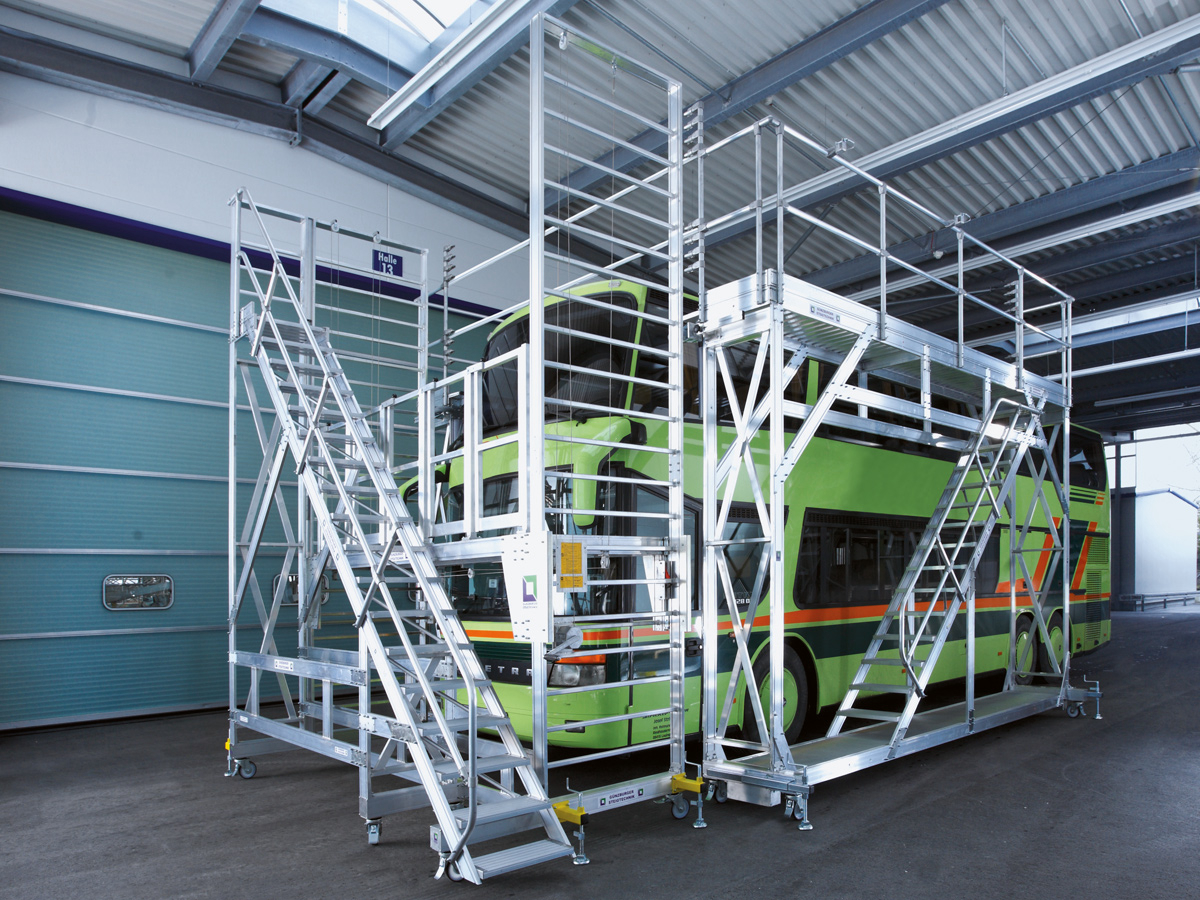
Work platforms are essential in environments where the assembly and maintenance of commercial vehicles and rail equipment are carried out. They are designed to meet high standards for both operational efficiency and occupational safety.
Our solutions provide a wide range of access options, including platform stairs, working platforms, access steps, bridging steps, roof access platforms, maintenance platforms, end platforms, walkways, and tanker ladders.
These systems enable safe and reliable access to elevated work areas, allowing operators to carry out a wide range of tasks at height efficiently and with confidence.
Aviation
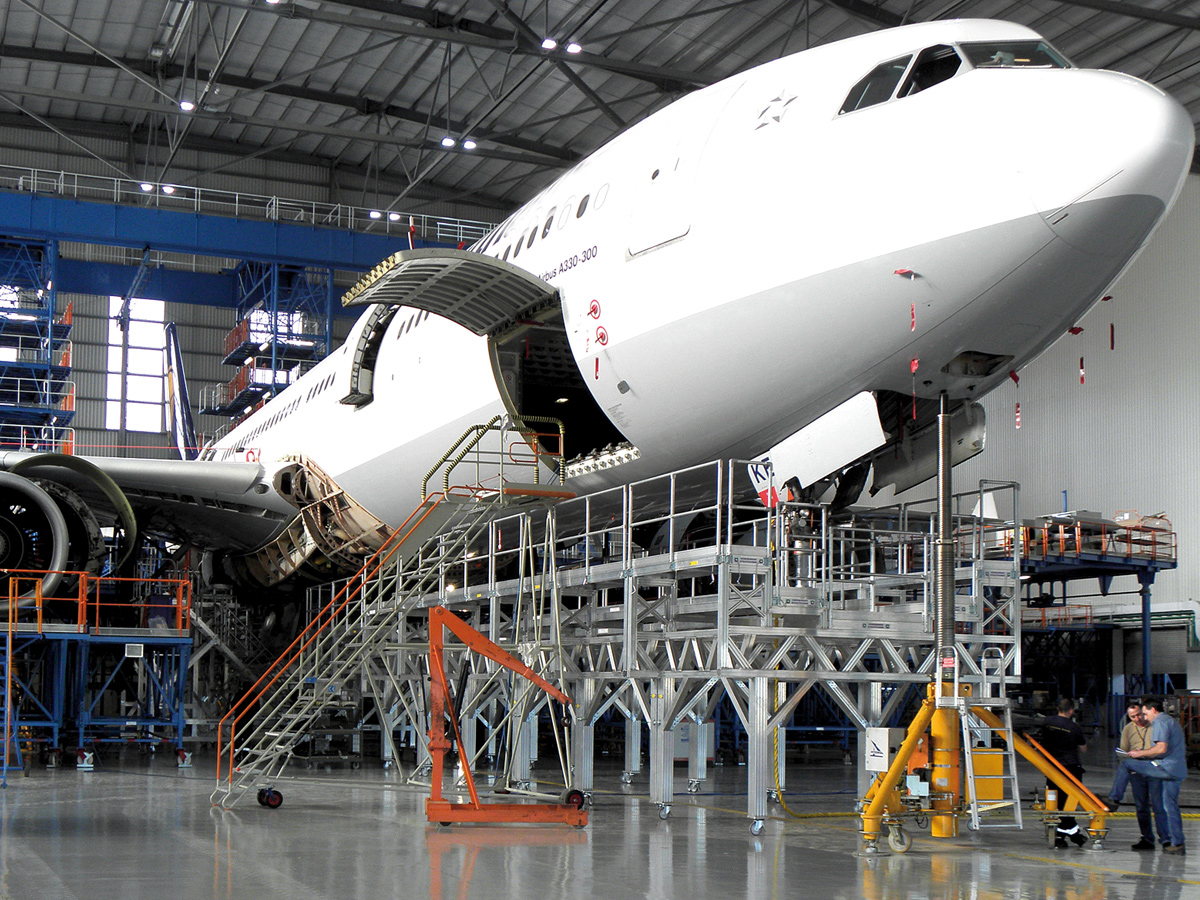
Work platforms are also widely used in the aviation sector, where the construction and maintenance of aircraft place specific demands on access equipment.
These solutions must be highly flexible and adaptable to accommodate the complex shapes and structures of modern aircraft. Platforms can be configured for universal use or tailored to specific aircraft types, depending on operational requirements.
This level of adaptability enables safe, efficient access to all working areas, supporting maintenance and assembly tasks across a range of aircraft.
Crane Manufacturing and Assembly
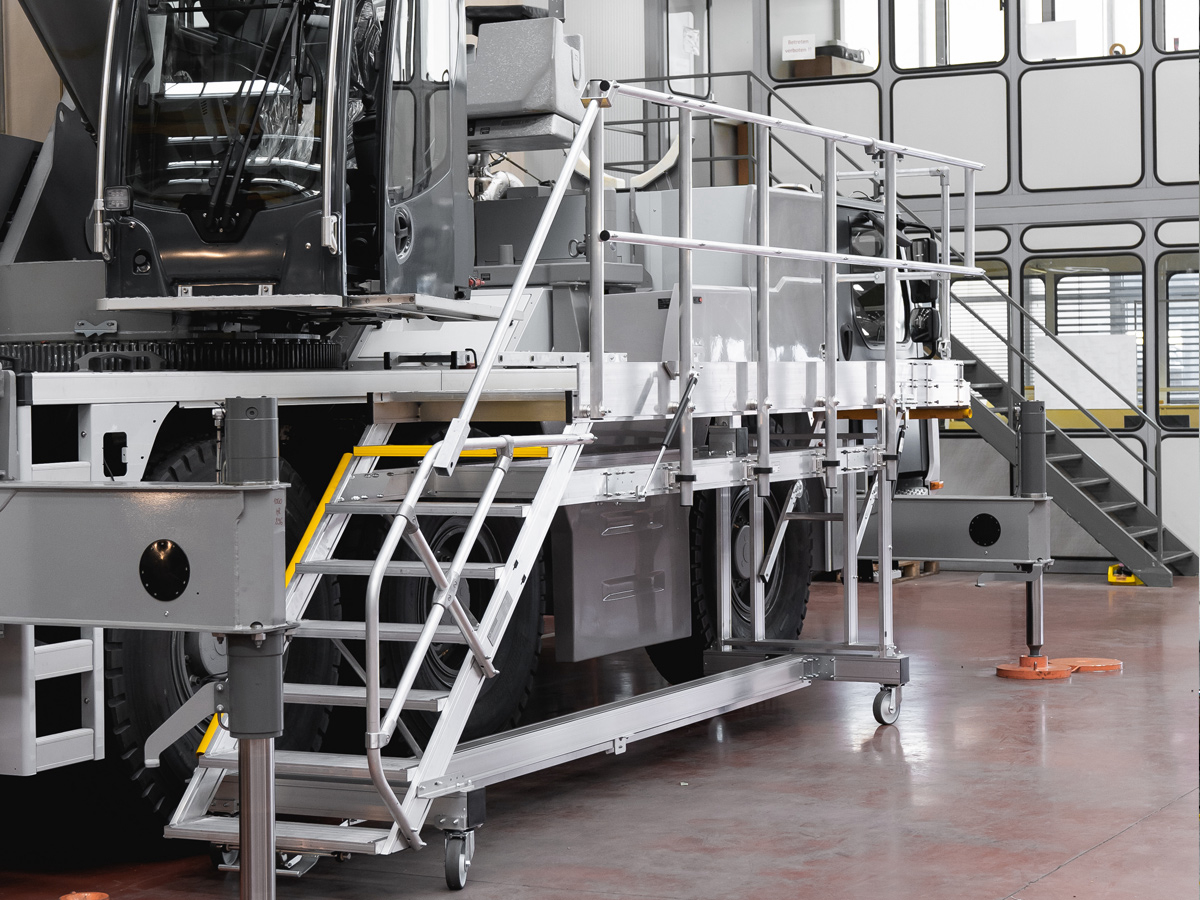
Work platforms play a key role in crane manufacturing, supporting both assembly and maintenance activities. They are designed to meet high standards of operational efficiency and occupational safety, enabling safe access to elevated work areas and allowing tasks at height to be carried out with confidence.
Beyond crane manufacturing, work platforms are widely used across a range of industries. They help improve working conditions, increase efficiency, and reduce safety risks. As technology and safety standards continue to evolve, work platforms will remain essential in modern workplaces, supporting productivity and protecting workers.
FAQ: Work Platforms
Who are work platforms intended for?
Work platforms are designed for personnel working at height across a wide range of industries. This includes tradespeople, technicians, maintenance teams, and cleaning staff. They provide safe and stable access to elevated working areas for a variety of tasks.
Why should you use work platforms?
Work platforms improve safety and efficiency when working at height. They provide a secure working surface, reducing the risk of falls and accidents. This enables workers to carry out maintenance, inspections, and repairs more safely and effectively.
When should fixed or mobile work platforms be used?
The choice between fixed and mobile work platforms depends on the application. Fixed platforms are ideal for permanent or regularly used work areas, while mobile platforms offer greater flexibility and are better suited to changing locations or varying working heights.
Do work platforms need to be inspected?
Yes, work platforms must be inspected regularly to ensure they remain safe to use. Inspections should be carried out in line with the Work at Height Regulations 2005 and manufacturer recommendations.
These inspections typically include checks on structural integrity, stability, functionality, and overall safety. Inspection frequency will depend on usage, environment, and risk level, but regular checks are essential to maintain compliance and ensure safe operation.