

Nothing must slip – even during emergency braking
In the UK, load securing is clearly defined under the Road Traffic Act 1988 and the Road Vehicles (Construction and Use) Regulations 1986. These require that loads are secured so that they do not pose a danger to the driver or other road users.
In practical terms, this means loads must be restrained to prevent movement, instability, or displacement during transport, including under conditions such as emergency braking or sudden manoeuvres.
Guidance from the Department for Transport Code of Practice on Load Securing reinforces the need to prevent shifting, rolling, or falling, ensuring safe transport at all times.
Legal responsibility and potential consequences
Load securing in the UK is supported by both legislation and recognised industry standards, including BS EN 12195-1 for calculating lashing forces.
Responsibility for safe load securing is shared. Drivers, operators, and those involved in loading all have a duty to ensure that loads are properly secured before transport.
Failure to comply can result in enforcement action under legislation such as the Health and Safety at Work etc. Act 1974 and the Road Traffic Act 1988. In serious cases involving injury or fatality, offences such as corporate manslaughter or gross negligence manslaughter may be considered.
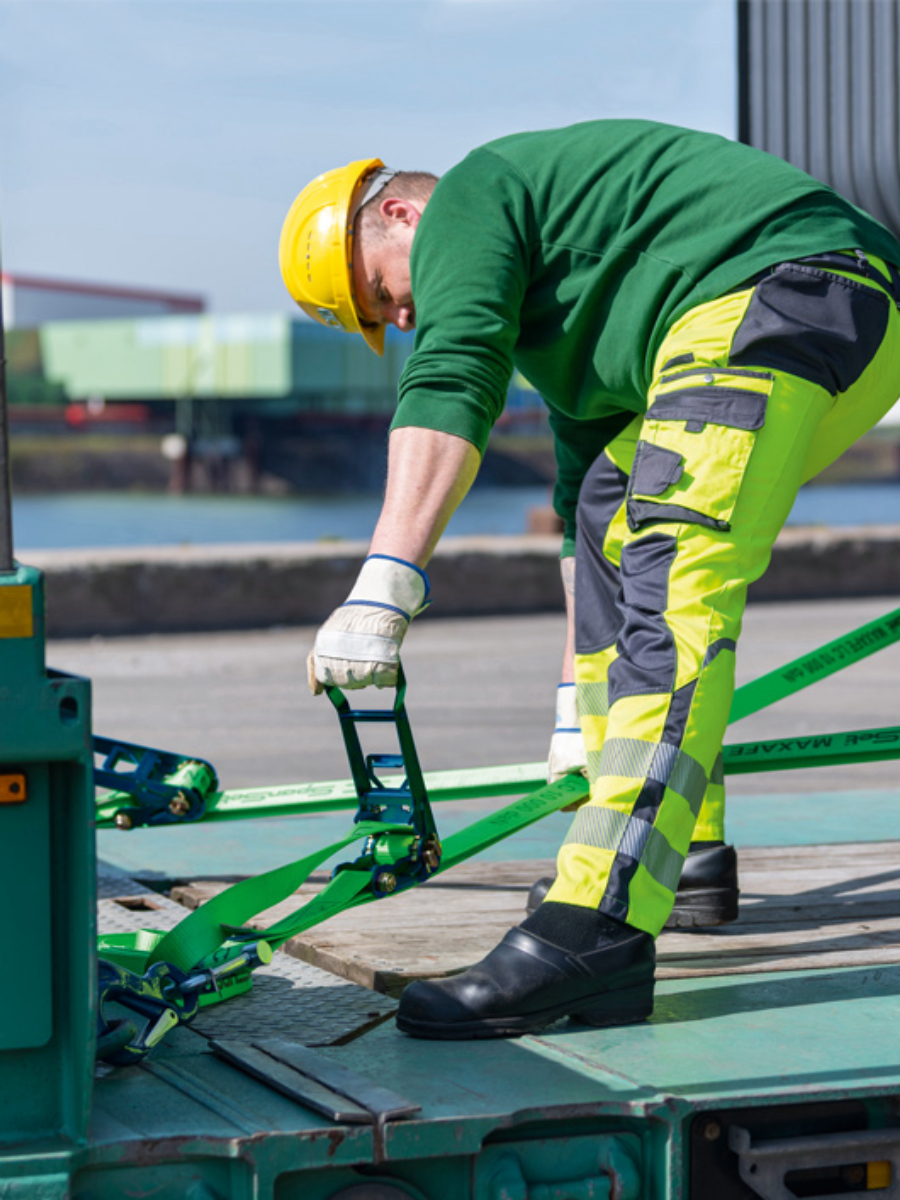
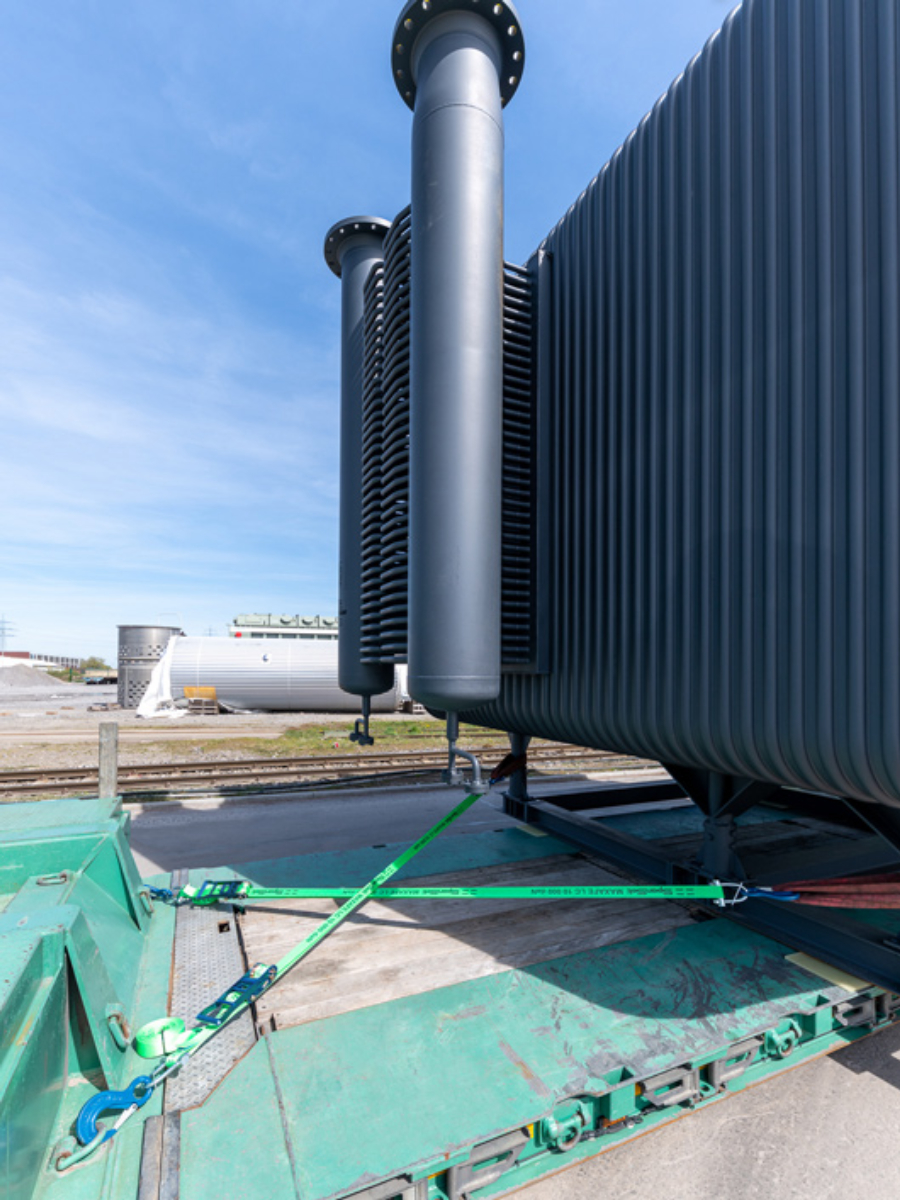
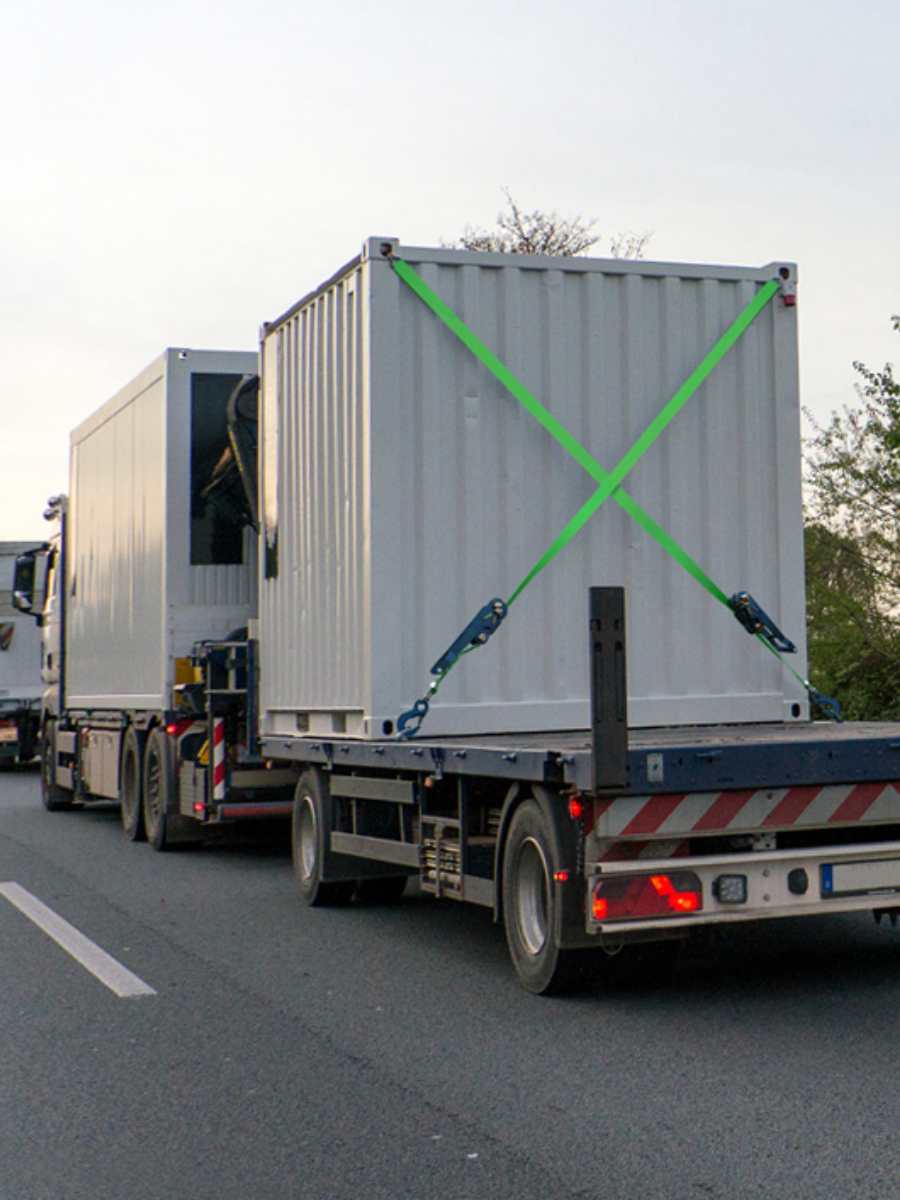
Comparable with iron chains: Elongation under 2 %
What applies to load securing in general is especially important when using diagonal lashing to secure large vehicles and machinery on low loaders. Typical loads include construction equipment, agricultural machinery, and other heavy-duty assets.
If a load shifts during transport, it can lead to serious accidents, resulting in injury and significant damage to property. This makes it essential to use professional, high-quality load securing equipment that can be relied upon in demanding conditions.
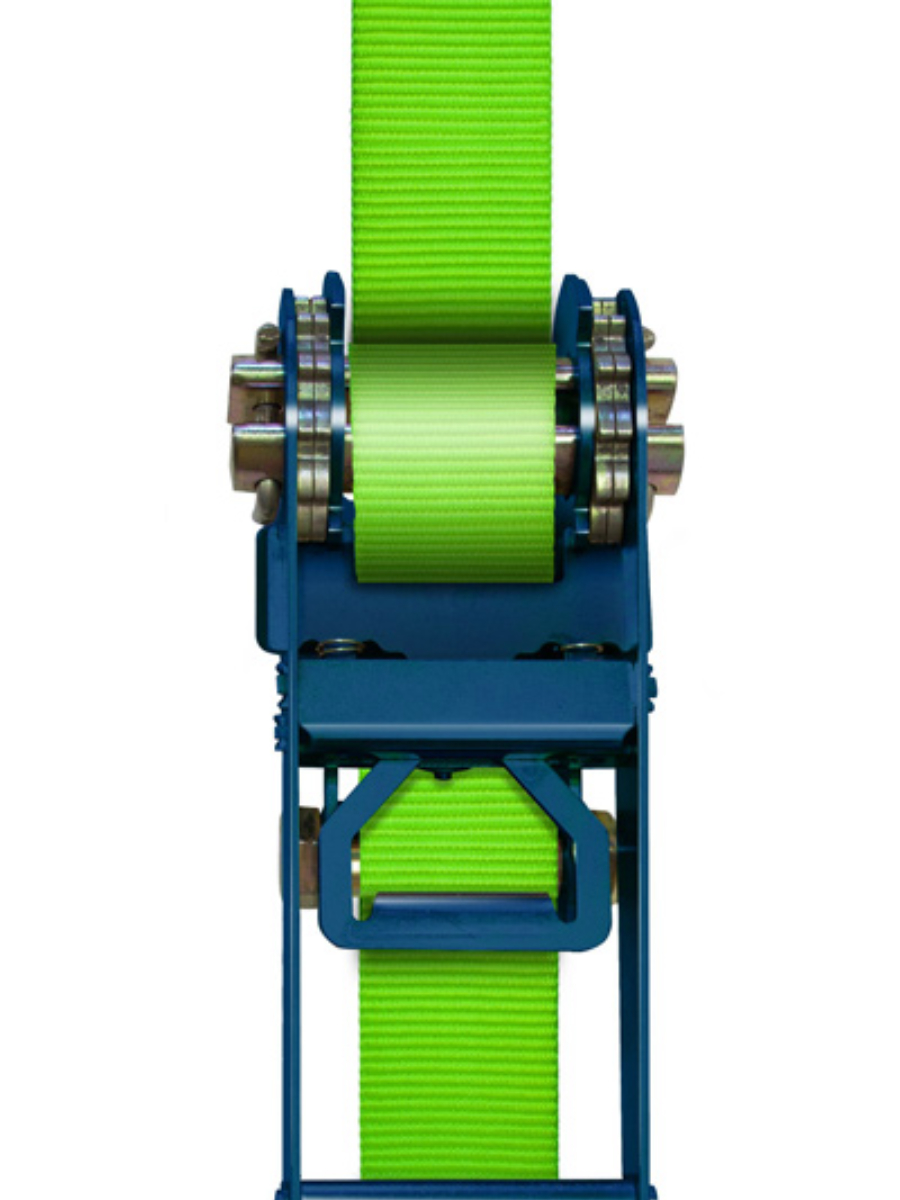
The SpanSet MaXafe heavy-duty lashing strap has been specifically developed for these applications. Depending on the variant, it offers a lashing capacity (LC) of 5,000 daN or 10,000 daN.
A key feature of the MaXafe system is its use of high-performance fibres with extremely low elongation of less than 2%. This ensures that forces are transferred directly into the lashing system during braking or sudden manoeuvres, significantly reducing load movement.
With elongation comparable to wire rope and chain systems, MaXafe provides a highly controlled and secure method of load restraint. An automated stitching process further ensures consistent quality and reliability across every strap.
Less physical exertion
The high tensile strength of the material offers a further advantage. Despite being approximately 55 mm wide, the lashing strap made from high-performance polyester delivers comparable strength to a conventional 75 mm strap.
This results in a significantly lighter system, reducing weight by almost 25%. The lower weight improves handling during use and helps to reduce strain on the operator.
MaXafe heavy-duty lashing strapFAQ: MaXafe heavy-duty lashing strap
Why is MaXafe lighter and narrower than comparable heavy-duty lashing straps?
The material makes the difference. MaXafe is woven from high-performance polyester. Significantly less of this is needed to achieve the same tensile strength as belts made from conventional material.
What is the difference between MaXafe variants with an LC of 5,000 and 10,000 daN?
The difference in lashing capacity (LC) is due to the fact that the 10,000 decanewton variant is equipped with high-strength connecting elements and a double-layered webbing ("carlash principle"). Both variants are around 55 mm wide.
In which versions is the MaXafe available?
The MaXafe heavy-duty lashing strap is available in the Carl Stahl webshop in lengths of 3 or 4 metres and with safety hooks or triangle hooks as connecting elements.
Are there other load securing devices besides lashing straps for heavy goods transport?
In practice, lashing chains of quality class 12 and quality class 8 are also frequently used when it comes to securing heavy equipment such as construction machinery on a low-loader.